Context and strategic foresight
CEs, boards and leadership teams
Organisation
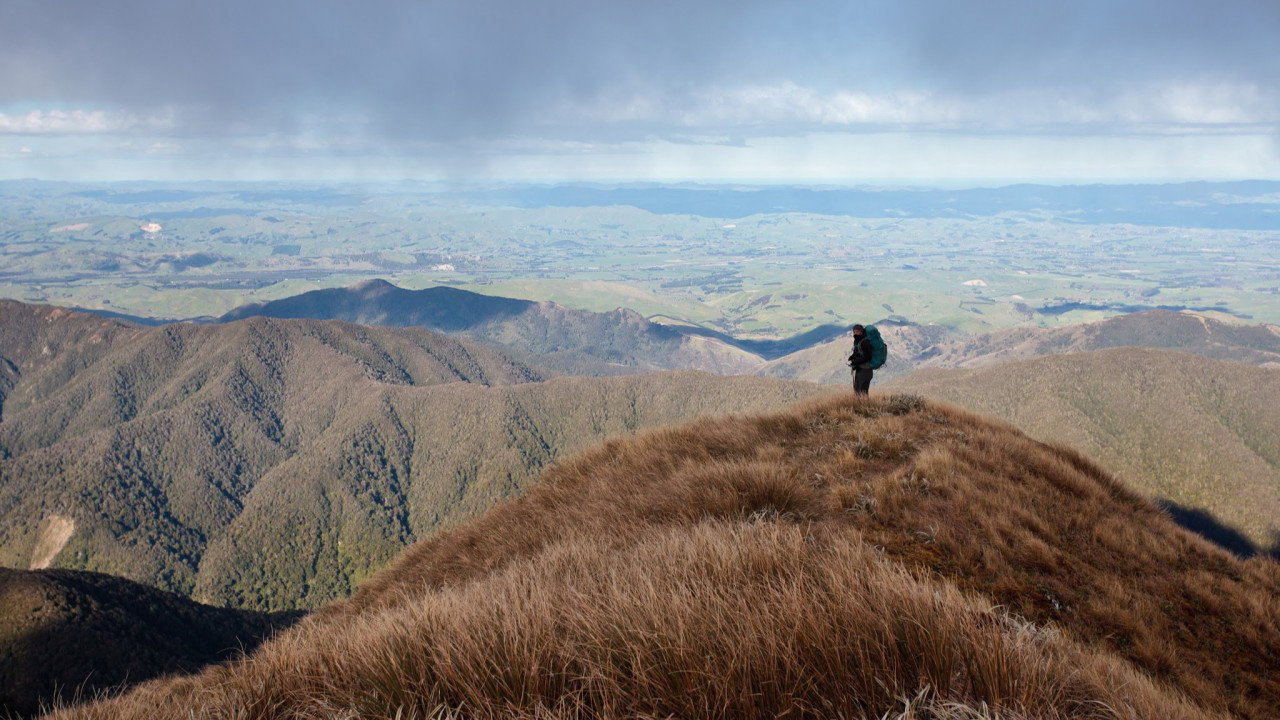
Before any strategic choice gets made, an earlier one already has: what we decided to look at. This piece is about context, the first step of Strategic Orientation, and why it shapes everything that follows.
A blank page
A consultant once opened a strategy process I was part of with a blank page and one question: “If you could start from scratch, what would you be doing?”
People switched off almost straight away. We had a history, commitments we’d made and people relying on us. None of it was on that page, so none of it could shape what came next.
The thing is, before we make a single strategic choice, we’ve already made one. We’ve already decided what to look at. And what we choose to look at decides what we can choose to do.
The first direction: where are we standing?
What should we choose to look at? Well, if we don’t know where we are, and where we’ve come from, how can we lead anyone into the unknown toward what we want to become?
The whakataukī Ka mua, ka muri (walking backwards into the future) reminds us to look to our past to inform our future. We move forward with our eyes on where we’ve come from.
Most of us never start on a blank page. Context begins with a baseline: our history, what we’re doing now, the responsibilities we carry and what we want to carry forward. How are we showing up right now?
But we need to do more than look. We need to bring things into a focus of what matters and why.
I've been part of countless strategy sessions where everything went on the wall and everything stayed there.
The plan that followed gave every area its own column. Our people, quality, partnerships, products, systems, IT, and so forth.
Yet the one priority we all agreed mattered most to reach our goals got the least attention, year after year, because nothing was ever stopped to make room for it. Our focus started wide, and stayed there.
We’d looked at everything, so we could choose nothing.
Good context is about making sense of what we see: the what, the so what, and the what's next. We look widely so we can decide what matters most.
The second direction: the perspectives that shape our understanding
What we see also depends on who’s doing the looking.
Whose perspectives need to shape the next chapter? Sometimes an executive team and board simply want to check in mid-rhythm. Sometimes you keep things internal and bring your staff on the journey. And sometimes it's a reset, and you want the full range: the voices of your partners, beneficiaries and the people you're responsible to.
One year in my own organisation, we brought everyone into it. Sixty people, twelve sessions, twelve weeks, shaping our next chapter together.
But we didn't ask the voices external to us. We felt pretty confident that we knew through other work we'd completed what they wanted to see from us.
What we ultimately missed was a feeling of ownership among the people we served. We'd involved a lot of people, but we hadn't involved everyone whose perspective mattered.
It's not about how many people we bring into a strategy process. It's whose understanding of the world needs to shape the choices ahead.
The third direction: reading the weather
Anyone who’s planned an adventure in our wilderness knows to check the forecast more than once. Conditions change, and the path you planned for isn’t always the one you’ll travel.
So we look up and around. What’s shifting? What’s emerging? How are our people holding up?
It helps to distinguish between two kinds of change.
Shifts are already underway. A funding decision has been made. A regulatory direction has been confirmed. Demand has already moved.
Signals come earlier and are easier to miss. A change in policy tone, a partner showing strain, a tightening labour market, community sentiment starting to turn.
A shift needs a response. A signal needs watching.
We look across our people, our relationships, our business and our processes. Then we get selective. For every shift and signal, we ask the same question: does this change our choices? If everything is urgent, nothing is.
What's left are the tensions: the places where two good things pull against each other. Protecting the core while making room for something new. Moving fast while bringing people with us.
These aren't problems we can necessarily solve once and move on from. Rather, they're competing demands we'll need to navigate as conditions change. That's where the strategy will be tested, so we name them out loud.
The fourth direction: imagining the channels
Only then do we look ahead, at more than one possible future. Picture the river ahead splitting into several channels.
Some futures would change everything, and we'd have considerable influence over how they unfold. Others could change just as much, but leave us with far less say. Some would bring more moderate change that we could shape; others would slowly erode what we can influence.
We explore four possibilities:
- Transformation: a big shift we have real room to shape.
- Shock: a big shift that happens to us, with far less say in it.
- Stability: a moderate shift we can shape.
- Decline: a moderate shift that slowly erodes what we can influence.
For each, we ask what becomes harder or easier, where pressure would build, and which assumptions we'd need to rethink.
One Executive Director put it better than I could:
“Instead of assuming the future would unfold the way we expect, [we] explored a range of possibilities. That distinction alone made our planning feel more robust.”
Exploring different futures helps us test our thinking before circumstances do it for us. It also gives us a better basis for imagining the future we actually want to shape.
One of my favourite moments in this work was with a board, beachside in the North Island, after a significant stretch of change.
The night before anyone sat down at the table, each person stepped alone into a future twenty years out. What did they see, hear and feel? Looking back, what had pushed them? What was their biggest regret, and their biggest achievement?
Doing it alone was liberating, especially for a group where one or two voices would normally fill the space.
My job, before the session even started, was to weave those stories into one picture: a future seen through the eyes of everyone at that table. It meant we could begin with a shared picture shaped by everyone's perspective, rather than the loudest voices in the room.
Where to look longest
The nuance is knowing where to spend your time, and you know your organisation best.
For a team that’s been stuck in the weeds, putting out fire after fire, a good chunk of time imagining different futures can be incredibly valuable. It stretches the view, and it’s refreshing for people who’ve been living in reactive mode.
For others, the most value comes from pausing to look at what’s changed: for our people, our relationships, our business, our processes.
And for organisations with a strong strategic rhythm, the richer work is in the assumptions and tensions sitting under the surface. How is what’s happening around us challenging our biases and ways of working? What would happen if we flipped them?
There's no single right balance. The point is to recognise where a different kind of attention will make the greatest difference.
What we carry forward
Pull it together and context is four ways of looking:
- Where we’re standing: our history, what we’re doing now, what we carry, and how we’re showing up.
- Whose perspectives shape it: the voices at the table and beyond it.
- Reading the weather: the shifts, signals and tensions around us.
- Imagining the channels: the futures we might meet, and the one we want to shape.
Out of all of that, we name the three key influences most likely to shape our choices over the next 24 months, and the two tensions we need to examine now.
Five things. A focused view of what matters most as we begin to choose.
These become the starting point for the next step: position. How we're going to show up for the future we want to shape and what anchors us as we head in that direction.
Reflection
- What are we looking at most right now, and what’s that leaving out?
- Whose eyes are we seeing our future through, and whose are missing?
- Which of our assumptions only holds while conditions stay favourable?
- Where would our organisation benefit most from looking longer?
Before we can decide where to go, we need to understand the ground we're standing on.
Want support with what came up?
If you want to work through context in your own organisation, an Orientation Call is a good place to start. No preparation required, just twenty minutes to work out the right next step together.